
 Essential Oil
 Carrier or vegtetable oil
 Plant straight powder
 Ratio extracts
 Standardized plant extracts



| Commercial name | Passion fruit seed oil |
| CAS # | 356065-50-4 |
| Botanical name | Passiflora edulis f. flavicarpa |
| Plant part | Seed |
| Origin | Brazil |
| Manufacturing place | Brazil |
Passion Fruit Seed Oil
The Brazil nut is, in fact, a seed rather than a nut, but popular usage continues to prevail. Nutritionally, Brazil nuts are an excellent source of selenium and a good source of magnesium and thiamine. There are 14% protein, 11% carbohydrates, and 67% fat (1). The fat breakdown is roughly 25% saturated, 41% monounsaturated, and 34% polyunsaturated. The absolute saturated fat content of Brazil nuts is among the highest of all nuts, surpassing even macadamia nuts.
The proteins found in Brazil nuts are very high in sulfur-containing amino acids like cysteine (8%) and methionine (18%) and are also extremely rich in glutamine, glutamic acid, and arginine. The presence of these amino acids enhances the absorption of selenium and other minerals in the nut.
IDENTFICATION DATA
SPECIFICATION
| Parameters | Limits | Test methods |
| Acid Value | < 5% Oleic Acid | AOCS Ca 5a-40 |
| Peroxide Value | < 10 mEq/Kg | NF EN ISO27107 |
| Saponification value | 190-200 | AOCS Cd 1-85 |
| Insoluble Impurities | < 0.001% | AOCS Ca 3a-46 |
| Alpha Linolenic Acid | < 0.5% | AOCS Ce 1e-91 |
| Linoleic Acid | 40-50% | AOCS Ce 1e-91 |
| Oleic Acid | 25-35% | AOCS Ce 1e-91 |
| Palmitic Acid | 10-16% | AOCS Ce 1e-91 |
PROPERTIES
- Nutritive oil – Very good source of vitamin-E with about 7.87 mg per 100 g (52% of RDA).
- Antioxidant – Brazil nuts hold exceptionally high levels of selenium. 100 g nuts provide about 1917 µg or 3485% recommended daily intake of selenium, rating them as the highest natural source of this mineral.
- Emollient
APPLICATION
- Hair care: shampoos and hair conditioning/repair products.
- Skin care: nourishing and softening
TECHNICAL DOCUMENT
| Product description | Product specification | MSDS |
REFERENCE
(1) FAO (1993) – “Selected species and strategies to enhance income generation from Amazonian Forest“
NOTES
Notes: The data presented within this document is offered in good faith, and is based on information believed to be reliable. It is offered for informational and evaluation purposes only. Natural Sourcing, LLC provides this product with the understanding that the purchaser will initiate their own testing to determine the suitability of this product for their intended purpose. Natural Sourcing assumes no liability or responsibility for any damage to person or property resulting from the use of this product or the incorporation of this product into any final formulation or product. Statements concerning the use of this product are not to be construed as a recommendation, suggestion or inducement to use the product in any way or within any formulation that is unlawful to create or sell, that violates any applicable regulations or that infringes upon any patent. No liability arising out of such a use is assumed.
Related products


Pomegranate Seed Oil
Pomegranate is an antioxidant, prized for its virtues against cholesterol, cardiovascular risks as well as prostate adenoma and its cancer complications. It is also rich in iron, potassium, copper, vitamins B5, B6, B9 and C. Its therapeutic properties are multiple since the flowers are astringent, especially useful in case of diarrhea or hemorrhage, while the bark is deworming but prohibited for sale because of its poor tolerance.


Pumpkin Seed Oil
The pumpkin grows as a large, annual creeper. The stems, thick and non-lignified, elongate rapidly in one season, sometimes over 5 m, with some branching. The leaves are alternate, carried by a long upright petiole. They deploy a large palmate blade, almost rounded, presenting 3 important veins. The rod crawls or sometimes climbs on a support. The plant is covered with fine transparent hairs, unpleasant to the touch.
The flowers appear in summer, male flowers first, then female flower next, recognizable by its inferior ovary, a small ball under the flower. The stems should be long and branched to produce several female flowers.
The fruits are massive and rounded, capable of weighing more than 15 kg. The pumpkin is yellow as it grows, then turns orange as it ripens. It contains large, flat seeds, rich in nutrients


Chia seed oil
Chia seed oil is cold-pressed extracted from the chia seeds commonly referred to as a superfood.
Chia seed oil is an especially great option for vegetarians and vegans to obtain omega-3 fatty acids from a botanical source. It is a popular supplement due to its high level of alpha-Linolenic acid (ALA) which cannot be produced by the body, but must be obtained through the diet alone. Chia seed oil is also used in the food industry as a cooking oil and as a popular ingredient in various salad dressings. In the cosmetic industry chia seed oil is used in body creams and lotions used topically to treat dry skin and promote healthier hair.
The seeds yield 25–30% extractable oil


Argan Oil
Argan oil is extracted from the fruit's kernel of the argan tree (Argania spinosa). Nicknamed the "the tree of life," this wild, thorny tree grows exclusively in southwestern Morocco. It can grow as high as eight to ten meters and can live up to two hundred years.
Argan oil, due to its high content of vitamin E, is ideal to fight against dryness and skin ageing process. It is perfect also to strengthen the nails thanks to the presence of unsaponifiables.
Very trendy oil in cosmetic products, many laboratories are using this oil for nail and hair cares, but also for creams and lotions. The oil, even expensive, is also used by of soaps manufacturers.
A Argan tree gives 180kg of fruits a year. It takes 30kg of Argan fruits to get 2 kg of Argan kernel which is the minimum quantity of kernel to get 1kg of Argan oil (when the yield can reach 50%).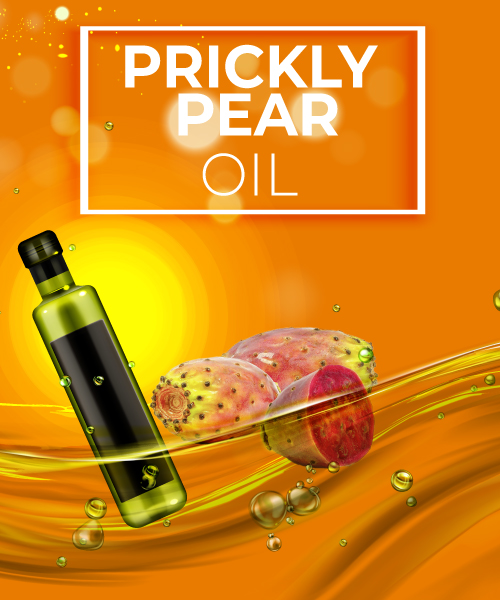

Prickly Pear Oil
This cactus plant of the Cactaceae family [1], originated from Mexico, was introduced into North Africa in the 16th century [2]. Nowadays, Opuntia Ficus Indica grows everywhere in Morocco.
Seeds contained in the pulp, accounts for 2 to 10% [3,4]. And it was reported that oil content varies according to the origin of the seed. The Italian cultivar was about 9.14% [5] when Moroccan one contain between 5 to 6%. The Tunisian cultivar has about 11% [8], South African one 5-6% and Chinese 6% [10].
So, we can conclude that the oil content in the prickly seed will be between 5 to 10% according to the cultivar used for the extraction. And finally, we can say that to get 1 kg of oil, between 300 and 500kg of fresh fruits will be needed.
The oil processed from the seeds is characterized by a high degree of unsaturation wherein linoleic acid is the major fatty acid (56.1–77%). Oleic (C18:1) and linoleic (C18:2) acids can count for more than 80% [8] of the total fatty acids.
The sterol fraction is usually about 1% of TL withβ-sitosterol as sterol marker, representing 72% of the total sterol content in seed oil.


Plum Kernel Oil
L'huile de prune est un ingrédient soluble dans l'huile qui peut être utilisé dans tout produit anhydre ou dans la phase huileuse d'un produit émulsionné. Il a un merveilleux arôme naturel avec des notes d'amandes et de fruits, qui peuvent apparaître dans le produit final en fonction du niveau de concentration. C'est un produit biodégradable et sans OGM.


Candlenut oil
The Candlenut, is a flowering tree, in the Euphorbiaceae family, also known as Candleberry, Indian walnut, Kemiri, Varnish tree, Nuez de la India, Buah keras or Kukui nut tree. A medium or large sized, spreading, tropical tree up to 50-80ft tall. Cooked nuts are generally edible, although some strains contain high amounts of cyanide. Usually the nut is pressed for its oil, which is used for a variety of industrial purposes like soap making, varnishes, and fuel.
The oil is sometimes used medicinally similar to castor oil, as well as a laxative. In Southeast Asia, the oil is sometimes applied topically to treat headaches, fevers and swollen joints.
In Ancient Hawaii, kukui nuts were burned to provide light. The nuts were strung in a row on a palm leaf midrib, lit one end, and burned one by one every 15 minutes or so. This led to their use as a measure of time. One could instruct someone to return home before the second nut burned out. Hawaiians also extracted the oil from the nut and burned it in a stone oil lamp called a “kukui hele po” (light, darkness goes) with a wick made of kapa cloth.
Other uses of the oil were found in Hawaii such as a coating of fishing nets with kukui oil in order to preserve them.
In Tonga, even today, ripe nuts, named tuitui are pounded into a paste, tukilamulamu, and used as soap or shampoo. As recently as 1993, candlenuts were chewed into sweet-scented emollient utilized during a traditional funerary ritual in the outlying islands of the Kingdom of Tonga. Their scent was also used for making various sweet smelling oils for the skin.
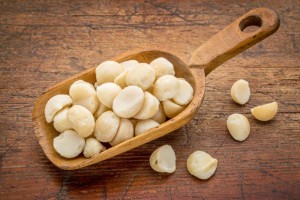

Modern cultivation is mostly for the oil. In plantations, each tree will produce 30-80 kg of nuts, and the nuts yield 15 to 20% of their weight in oil. They grow very well in tropical climates with ample rainfall, but also adapt to dry climates. Candlenut's need little if any care after they are established.
Kukui Nut Oil is a clear, pale, yellow, non-greasy oil, ranking very high amongst polyunsaturated vegetable oils, and can be used for skin and hair care. It is high in linoleic and linolenic acids. Kukui nut Oil also contains Vitamin A, E and F, and therefore, it is a good oil for anti-aging, revitalising and especially restoring sun damaged skin. The oil has been known to be often used in products that treat psoriasis and eczema, as well as acne.


Sea Buckthorn Oil
Sea buckthorn oil has been used for thousands of years as a natural remedy for various ailments.
It is extracted from the berries, leaves, and seeds of the sea buckthorn plant (Hippophae rhamnoides), which is a small shrub that grows at high elevations in the northwestern Himalayan region (Trusted Source).
Sometimes called the sacred fruit of the Himalayas, sea buckthorn can be applied to the skin or ingested.
A popular remedy in Ayurvedic and traditional Chinese medicines, it can offer health benefits ranging from supporting your heart to protection against diabetes, stomach ulcers, and skin damage.