 Essential Oil
 Carrier or vegtetable oil
 Plant straight powder
 Ratio extracts
 Standardized plant extracts



| Commercial name | Pomegranate |
| Botanical name | Punica granatum |
| Botanical family | Lythraceae |
| CAS # | 84961-57-9 |
| Plant part | Seed |
| Origin | Iran, Northern India |
| Manufacturing place | India |
Pomegranate Seed Oil
Pomegranate is an antioxidant, prized for its virtues against cholesterol, cardiovascular risks as well as prostate adenoma and its cancer complications. It is also rich in iron, potassium, copper, vitamins B5, B6, B9 and C. Its therapeutic properties are multiple since the flowers are astringent, especially useful in case of diarrhea or hemorrhage, while the bark is deworming but prohibited for sale because of its poor tolerance.
IDENTFICATION DATA
Related products


Plum Kernel Oil
L'huile de prune est un ingrédient soluble dans l'huile qui peut être utilisé dans tout produit anhydre ou dans la phase huileuse d'un produit émulsionné. Il a un merveilleux arôme naturel avec des notes d'amandes et de fruits, qui peuvent apparaître dans le produit final en fonction du niveau de concentration. C'est un produit biodégradable et sans OGM.


Pumpkin Seed Oil
The pumpkin grows as a large, annual creeper. The stems, thick and non-lignified, elongate rapidly in one season, sometimes over 5 m, with some branching. The leaves are alternate, carried by a long upright petiole. They deploy a large palmate blade, almost rounded, presenting 3 important veins. The rod crawls or sometimes climbs on a support. The plant is covered with fine transparent hairs, unpleasant to the touch.
The flowers appear in summer, male flowers first, then female flower next, recognizable by its inferior ovary, a small ball under the flower. The stems should be long and branched to produce several female flowers.
The fruits are massive and rounded, capable of weighing more than 15 kg. The pumpkin is yellow as it grows, then turns orange as it ripens. It contains large, flat seeds, rich in nutrients


Perilla Oil
Perilla is usually consumed directly in everyday life. The leaves are green (purple coloured if still young age) is used as a complement in salads, this leaves well-known in the culture barbeque in Korea. The seeds can be extracted an oil which is rich in benefits.
Perilla seed oil contains high levels of omega 3 fatty acids that are known to have antiseptic activity and to be effective against the bacteria responsible for acne. capacity is also attributed to this oil to suppress chronic inflammation and itching. Perilla seed oil is particularly suitable for use in a mixture, in facial massage oil, lotion, cream and as part of the scrub salt formulations.


Passion Fruit Seed Oil
The Brazil nut is, in fact, a seed rather than a nut, but popular usage continues to prevail. Nutritionally, Brazil nuts are an excellent source of selenium and a good source of magnesium and thiamine. There are 14% protein, 11% carbohydrates, and 67% fat (1). The fat breakdown is roughly 25% saturated, 41% monounsaturated, and 34% polyunsaturated. The absolute saturated fat content of Brazil nuts is among the highest of all nuts, surpassing even macadamia nuts.
The proteins found in Brazil nuts are very high in sulfur-containing amino acids like cysteine (8%) and methionine (18%) and are also extremely rich in glutamine, glutamic acid, and arginine. The presence of these amino acids enhances the absorption of selenium and other minerals in the nut.

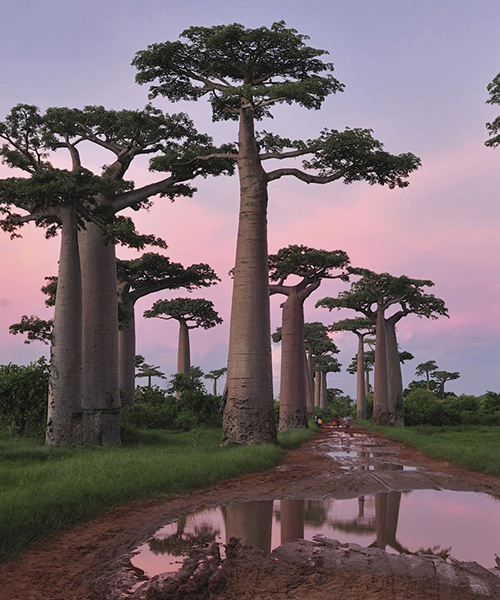
Baobab oil
The Baobab is therefore a tree native to Tropical Africa. In Africa, all parts of the baobab are exploited for their therapeutic and nutritional virtues: roots, leaves, trunk, bark, pulp, seeds. It is also integrated into the development of traditional African remedies.
The pulp of the fruit called "monkey bread" has a tangy taste similar to our raisins or lemon.
The pulp can be consumed as a refreshing and energy drink by mixing it in water and / or condensed milk, a mixture called "Bouye" in Senegal.


Candlenut oil
The Candlenut, is a flowering tree, in the Euphorbiaceae family, also known as Candleberry, Indian walnut, Kemiri, Varnish tree, Nuez de la India, Buah keras or Kukui nut tree. A medium or large sized, spreading, tropical tree up to 50-80ft tall. Cooked nuts are generally edible, although some strains contain high amounts of cyanide. Usually the nut is pressed for its oil, which is used for a variety of industrial purposes like soap making, varnishes, and fuel.
The oil is sometimes used medicinally similar to castor oil, as well as a laxative. In Southeast Asia, the oil is sometimes applied topically to treat headaches, fevers and swollen joints.
In Ancient Hawaii, kukui nuts were burned to provide light. The nuts were strung in a row on a palm leaf midrib, lit one end, and burned one by one every 15 minutes or so. This led to their use as a measure of time. One could instruct someone to return home before the second nut burned out. Hawaiians also extracted the oil from the nut and burned it in a stone oil lamp called a “kukui hele po” (light, darkness goes) with a wick made of kapa cloth.
Other uses of the oil were found in Hawaii such as a coating of fishing nets with kukui oil in order to preserve them.
In Tonga, even today, ripe nuts, named tuitui are pounded into a paste, tukilamulamu, and used as soap or shampoo. As recently as 1993, candlenuts were chewed into sweet-scented emollient utilized during a traditional funerary ritual in the outlying islands of the Kingdom of Tonga. Their scent was also used for making various sweet smelling oils for the skin.
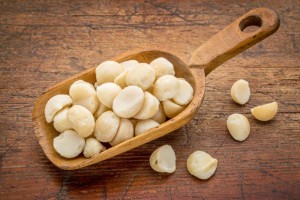

Modern cultivation is mostly for the oil. In plantations, each tree will produce 30-80 kg of nuts, and the nuts yield 15 to 20% of their weight in oil. They grow very well in tropical climates with ample rainfall, but also adapt to dry climates. Candlenut's need little if any care after they are established.
Kukui Nut Oil is a clear, pale, yellow, non-greasy oil, ranking very high amongst polyunsaturated vegetable oils, and can be used for skin and hair care. It is high in linoleic and linolenic acids. Kukui nut Oil also contains Vitamin A, E and F, and therefore, it is a good oil for anti-aging, revitalising and especially restoring sun damaged skin. The oil has been known to be often used in products that treat psoriasis and eczema, as well as acne.

Prickly Pear Oil
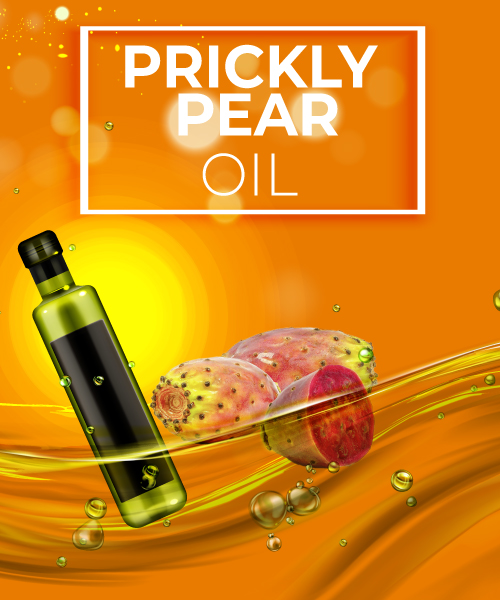
This cactus plant of the Cactaceae family [1], originated from Mexico, was introduced into North Africa in the 16th century [2]. Nowadays, Opuntia Ficus Indica grows everywhere in Morocco.
Seeds contained in the pulp, accounts for 2 to 10% [3,4]. And it was reported that oil content varies according to the origin of the seed. The Italian cultivar was about 9.14% [5] when Moroccan one contain between 5 to 6%. The Tunisian cultivar has about 11% [8], South African one 5-6% and Chinese 6% [10].
So, we can conclude that the oil content in the prickly seed will be between 5 to 10% according to the cultivar used for the extraction. And finally, we can say that to get 1 kg of oil, between 300 and 500kg of fresh fruits will be needed.
The oil processed from the seeds is characterized by a high degree of unsaturation wherein linoleic acid is the major fatty acid (56.1–77%). Oleic (C18:1) and linoleic (C18:2) acids can count for more than 80% [8] of the total fatty acids.
The sterol fraction is usually about 1% of TL withβ-sitosterol as sterol marker, representing 72% of the total sterol content in seed oil.