
 Essential Oil
 Carrier or vegtetable oil
 Plant straight powder
 Ratio extracts
 Standardized plant extracts

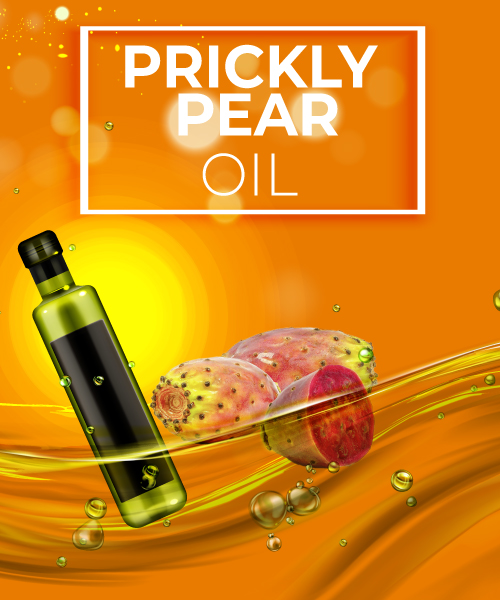

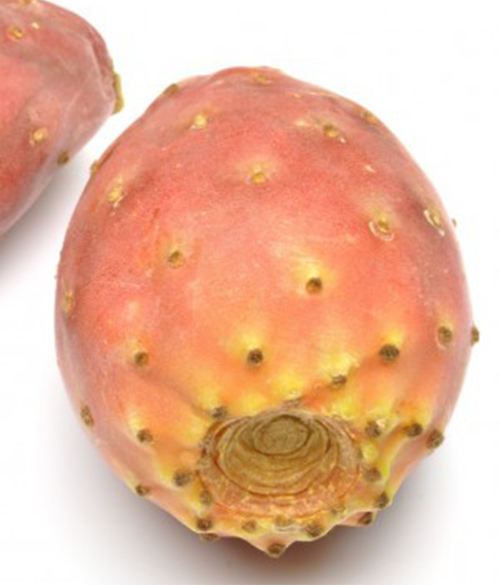


| Commercial name | Prickly pear seed oil |
| CAS # | 90082-21-6 |
| Botanical name | Opuntia ficus-Indica |
| Plant part | Seed |
| Origin | Morocco |
| Manufacturing place | Morocco |
Prickly Pear Oil
This cactus plant of the Cactaceae family [1], originated from Mexico, was introduced into North Africa in the 16th century [2]. Nowadays, Opuntia Ficus Indica grows everywhere in Morocco.
Seeds contained in the pulp, accounts for 2 to 10% [3,4]. And it was reported that oil content varies according to the origin of the seed. The Italian cultivar was about 9.14% [5] when Moroccan one contain between 5 to 6%. The Tunisian cultivar has about 11% [8], South African one 5-6% and Chinese 6% [10].
So, we can conclude that the oil content in the prickly seed will be between 5 to 10% according to the cultivar used for the extraction. And finally, we can say that to get 1 kg of oil, between 300 and 500kg of fresh fruits will be needed.
The oil processed from the seeds is characterized by a high degree of unsaturation wherein linoleic acid is the major fatty acid (56.1–77%). Oleic (C18:1) and linoleic (C18:2) acids can count for more than 80% [8] of the total fatty acids.
The sterol fraction is usually about 1% of TL withβ-sitosterol as sterol marker, representing 72% of the total sterol content in seed oil.
- IDENTIFICATION DATA
- SPECIFICATION
- STEROLS AND VITAMINS E COMPOSITIONposition
- APPLICATIONS
- PROPERTIES
- TECHNICAL DOCUMENTS
- REFERENCES
IDENTIFICATION DATA
SPECIFICATION
| Parameters | Limits | Test methods |
| Acid Value | < 4% | P.E. 2.5.1 |
| Peroxide Value | < 10 mEq/Kg | P.E. 2.5.5 |
| Saponification value | 192-195 | AOCS Cd 1-85 |
| Insoluble Impurities | < 0.001% | AOCS Ca 3a-46 |
| Linoleic Acid | 55-65% | AOCS Ce 1e-91 |
| Oleic Acid | 15-30% | AOCS Ce 1e-91 |
| Palmitic Acid | 10-15% | AOCS Ce 1e-91 |
| Stearic Acid | 2-5% | AOCS Ce 1e-91 |
STEROLS AND VITAMINS E COMPOSITIONposition
| Parameters | Limits | Test methods |
| Total sterols (mg/100g) | 9.33 | PE 2.4.23 |
| Campestrol | 1.0 – 2.0 % | |
| Beta-sitosterol | 60-70% | |
| Total Tocopherols (mg/100g) | 100-110 | AOCS Ce 8-89 |
| Alpha-Tocopherol | 0-1% | |
| Beta-Tocopherol | 0-0.5% | |
| Gamma-Tocopherol | 3-5% |
APPLICATIONS
Moisturizers
Anti-Aging Products
Hair Care
Nail Care
Lip Care
PROPERTIES
Rich in Vitamin E
Potent Anti-Oxidant
Good Source of Alpha (α-), Beta (β-) and Sigma (δ-) Tocopherols
Strong Anti-Inflammatory
TECHNICAL DOCUMENTS
| Product description | Product specification | IFRA 48 |
REFERENCES
(1) Reyes Aguero, J. A., Aguirre-Riveran, J. R., Hernandez, H. M., Systematic Notes and a detailed description of Opuntia ficus-indica (L.) MILL. (Cactacteae), Agrociencia, 39 (2005) 395-408.
(2) Griffiths, P., The origins of an important cactus crops, Opuntia ficus-indica (Cactaceae): new molecular evidence. Am. J. Bot., 91 (2004) 1915-1921.
(3) Arrizon, J., Calderon, C., Sandoval, G., Effect of different fermentation conditions on the kinetic parameters and production of volatile compounds during the elaboration of a prickly pear distilled beverage. Journal of Industrial Microbiology and Biotechnology, 33 (11) (2006) 921-928.
(4) Piga, A., Cactus Pear: a fruit of nutraceutical and functional importance. J. Prof. Assoc. Cactus Dev, 6 (2004) 9-22.
(5) Salvo, F., Galati, E. M., Lo Curto, S., Tripodo, M. M., Study on the chemical characterization of lipid composition of Opuntia ficus indica L. seed oil. Riv. Ital. Sostanze grasse, 79 (2002) 395-398.
(6) Sawaya, W. N., Khan, P.. Chemical characrterization of prickly pear seed oil, Opuntia ficus-indica. Journal of Food Science, 47 (1982) 2060-2061.
(7) Stintzing, F. C., Schieber, A. & Carle, R., Cactus pear, a promising component of functional food. Obst, Gemu ̈se und Kartoffelverarbeitung , 85 (1) (2000) 40-47.
(8) Ennouri, M., Evelyne, B., Laurence, M., Hamadi, A., Fatty acid composition and rheological behaviour of prickly per seed oils. Food Chem, 93 (2005) 431-437.
(9) Labuschagne, M. and Hugo, A., South Africa, oil content and fatty acid composition of cactus pear seed compared with cotton and grape seed. Journal of Food Biochemistry, 34 (1) (2010) 93-100.
(10) Wei, L., Yu-Jie, F., Yuan-Gang, Z., Mei-Hong, T., Nan, W., Xiao-Lei, L., Su, Z., Supercritical carbon dioxide extraction of seed oil from Opuntia dillenii Haw and its antioxidant activity. Food Chemistry, 114(2009) 334-339.
Need Google Scholar Need PubMed Need NCBI
Related products


Pomegranate Seed Oil
Pomegranate is an antioxidant, prized for its virtues against cholesterol, cardiovascular risks as well as prostate adenoma and its cancer complications. It is also rich in iron, potassium, copper, vitamins B5, B6, B9 and C. Its therapeutic properties are multiple since the flowers are astringent, especially useful in case of diarrhea or hemorrhage, while the bark is deworming but prohibited for sale because of its poor tolerance.


Passion Fruit Seed Oil
The Brazil nut is, in fact, a seed rather than a nut, but popular usage continues to prevail. Nutritionally, Brazil nuts are an excellent source of selenium and a good source of magnesium and thiamine. There are 14% protein, 11% carbohydrates, and 67% fat (1). The fat breakdown is roughly 25% saturated, 41% monounsaturated, and 34% polyunsaturated. The absolute saturated fat content of Brazil nuts is among the highest of all nuts, surpassing even macadamia nuts.
The proteins found in Brazil nuts are very high in sulfur-containing amino acids like cysteine (8%) and methionine (18%) and are also extremely rich in glutamine, glutamic acid, and arginine. The presence of these amino acids enhances the absorption of selenium and other minerals in the nut.


Pumpkin Seed Oil
The pumpkin grows as a large, annual creeper. The stems, thick and non-lignified, elongate rapidly in one season, sometimes over 5 m, with some branching. The leaves are alternate, carried by a long upright petiole. They deploy a large palmate blade, almost rounded, presenting 3 important veins. The rod crawls or sometimes climbs on a support. The plant is covered with fine transparent hairs, unpleasant to the touch.
The flowers appear in summer, male flowers first, then female flower next, recognizable by its inferior ovary, a small ball under the flower. The stems should be long and branched to produce several female flowers.
The fruits are massive and rounded, capable of weighing more than 15 kg. The pumpkin is yellow as it grows, then turns orange as it ripens. It contains large, flat seeds, rich in nutrients


Plum Kernel Oil
L'huile de prune est un ingrédient soluble dans l'huile qui peut être utilisé dans tout produit anhydre ou dans la phase huileuse d'un produit émulsionné. Il a un merveilleux arôme naturel avec des notes d'amandes et de fruits, qui peuvent apparaître dans le produit final en fonction du niveau de concentration. C'est un produit biodégradable et sans OGM.


Brazil Nut Oil
The Brazil nut is, in fact, a seed rather than a nut, but popular usage continues to prevail. Nutritionally, Brazil nuts are an excellent source of selenium and a good source of magnesium and thiamine. There are 14% protein, 11% carbohydrates, and 67% fat (1). The fat breakdown is roughly 25% saturated, 41% monounsaturated, and 34% polyunsaturated. The absolute saturated fat content of Brazil nuts is among the highest of all nuts, surpassing even macadamia nuts.
The proteins found in Brazil nuts are very high in sulfur-containing amino acids like cysteine (8%) and methionine (18%) and are also extremely rich in glutamine, glutamic acid, and arginine. The presence of these amino acids enhances the absorption of selenium and other minerals in the nut.
As with most nuts, the Brazil nut is rich in oils, variously reported at 65-70% of seed dry weight. Brazil nut oil is clear yellowish oil, which has a pleasant and sweet smell and taste.
Its texture and aroma gives it great versatility for use in a wide array of innovative personal care products. Brazil Nut Oil's high selenium content offers strong antioxidant properties. When used in personal care products, Brazil Oil hydrates and softens the skin.
Today, Brazil nut oil is used in soaps, shampoos and hair conditioning/repair products. As a hair conditioner it brings shine, silkiness, malleability and softness to hair. It helps renew dry, lifeless hair and split-ends and allows hair to remain soft and silky. It provides stabilising detergent properties and helps clean the hair.


Tucuma Oil
The tucumã kernel oil is very similar in appearance, consistency and properties to the the palm kernel oil. It is ideal for cooking. Due to their low level of free acids the refining process becomes much simpler compared to the palm oil. The high concentration of lauric acid (47%) detected in the tucumã kernel oil qualifies it with excellent properties for soap processing. Rich in omega 3, 6 and 9, it is an excellent moisturizer, used in cosmetics for skin hydration, body lotions and hair care products for damaged hair. It is also an excellent emollient with high spreadability. This oils is rich in beta-carotene being ideal for sun related skin care.
The fruit oil is highly nutritious containing one of the highest concentrations of β-carotene (180 to 330 mg/100 g of oil), only equaling the value of buriti pulp (Mauritia flexuosa). This exceptional high natural concentration of β-carotene, known as one of the most powerful natural antioxidants, forms a protective film and enhances the brilliance and vitality of dry and brittle hair. Contains high levels of vitamins A and C, in addition to the anti-oxidant properties, the topical application of these vitamins can improve the elasticity and firmness of the skin.


Camellia Oil
Historically, camellia oil is the main cooking oil used in the southern provinces of China. Camellia oil was found to reduce bad cholesterol. This is a high quality culinary oil that remains stable at high temperatures while providing the same nutritional and culinary properties of olive oil. On a dermatological level is a penetrating oil, making it an oil of choice for products and cosmetic formulations.