
 Essential Oil
 Carrier or vegtetable oil
 Plant straight powder
 Ratio extracts
 Standardized plant extracts



Commercial name Babassu oil
Botanical name Attalea speciosa
Botanical family Arecaceae
Plant part Seed
Origin Brazil
Manufacturing place Brazil
Fatty acid
Lauric 50.0%
Myristic 20.0%
Palmitic 11.0%
Oleic 10.0%
Stearic 3.5%
Babassu Oil
Babassu oil (Orbignya oleifera) is extracted from the kernels of the Babassu palm, native to Brazil and found throughout the Amazon region. Solid at room temperature, babassu oil is similar in appearance and application to coconut oil. It has a light consistency, easily penetrates the skin, and is moisturizing and firming in nature. Babassu is related to coconut, so those who are allergic to coconut may still be allergic to this substitute.
This emollient oil can be used on its own or included in a variety of cosmetic preparations such as balms, balms, lotions, creams, body butters, scrubs and soaps.
IDENTFICATION DATA
REFERENCE
(1) FAO (1993) – “Selected species and strategies to enhance income generation from Amazonian Forest“
Related products


Passion Fruit Seed Oil
The Brazil nut is, in fact, a seed rather than a nut, but popular usage continues to prevail. Nutritionally, Brazil nuts are an excellent source of selenium and a good source of magnesium and thiamine. There are 14% protein, 11% carbohydrates, and 67% fat (1). The fat breakdown is roughly 25% saturated, 41% monounsaturated, and 34% polyunsaturated. The absolute saturated fat content of Brazil nuts is among the highest of all nuts, surpassing even macadamia nuts.
The proteins found in Brazil nuts are very high in sulfur-containing amino acids like cysteine (8%) and methionine (18%) and are also extremely rich in glutamine, glutamic acid, and arginine. The presence of these amino acids enhances the absorption of selenium and other minerals in the nut.


Baobab oil
The Baobab is therefore a tree native to Tropical Africa. In Africa, all parts of the baobab are exploited for their therapeutic and nutritional virtues: roots, leaves, trunk, bark, pulp, seeds. It is also integrated into the development of traditional African remedies.
The pulp of the fruit called "monkey bread" has a tangy taste similar to our raisins or lemon.
The pulp can be consumed as a refreshing and energy drink by mixing it in water and / or condensed milk, a mixture called "Bouye" in Senegal.


Camellia Oil
Historically, camellia oil is the main cooking oil used in the southern provinces of China. Camellia oil was found to reduce bad cholesterol. This is a high quality culinary oil that remains stable at high temperatures while providing the same nutritional and culinary properties of olive oil. On a dermatological level is a penetrating oil, making it an oil of choice for products and cosmetic formulations.


Chia seed oil
Chia seed oil is cold-pressed extracted from the chia seeds commonly referred to as a superfood.
Chia seed oil is an especially great option for vegetarians and vegans to obtain omega-3 fatty acids from a botanical source. It is a popular supplement due to its high level of alpha-Linolenic acid (ALA) which cannot be produced by the body, but must be obtained through the diet alone. Chia seed oil is also used in the food industry as a cooking oil and as a popular ingredient in various salad dressings. In the cosmetic industry chia seed oil is used in body creams and lotions used topically to treat dry skin and promote healthier hair.
The seeds yield 25–30% extractable oil


Sea Buckthorn Oil
Sea buckthorn oil has been used for thousands of years as a natural remedy for various ailments.
It is extracted from the berries, leaves, and seeds of the sea buckthorn plant (Hippophae rhamnoides), which is a small shrub that grows at high elevations in the northwestern Himalayan region (Trusted Source).
Sometimes called the sacred fruit of the Himalayas, sea buckthorn can be applied to the skin or ingested.
A popular remedy in Ayurvedic and traditional Chinese medicines, it can offer health benefits ranging from supporting your heart to protection against diabetes, stomach ulcers, and skin damage.
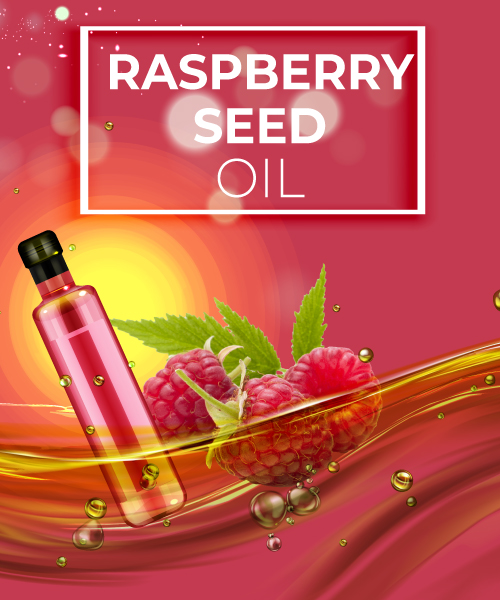


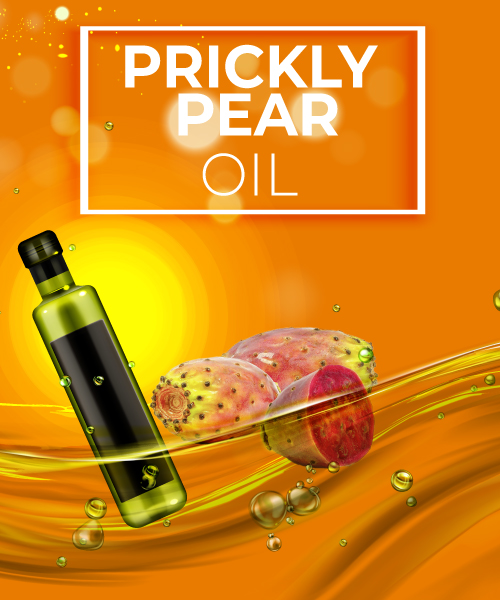

Prickly Pear Oil
This cactus plant of the Cactaceae family [1], originated from Mexico, was introduced into North Africa in the 16th century [2]. Nowadays, Opuntia Ficus Indica grows everywhere in Morocco.
Seeds contained in the pulp, accounts for 2 to 10% [3,4]. And it was reported that oil content varies according to the origin of the seed. The Italian cultivar was about 9.14% [5] when Moroccan one contain between 5 to 6%. The Tunisian cultivar has about 11% [8], South African one 5-6% and Chinese 6% [10].
So, we can conclude that the oil content in the prickly seed will be between 5 to 10% according to the cultivar used for the extraction. And finally, we can say that to get 1 kg of oil, between 300 and 500kg of fresh fruits will be needed.
The oil processed from the seeds is characterized by a high degree of unsaturation wherein linoleic acid is the major fatty acid (56.1–77%). Oleic (C18:1) and linoleic (C18:2) acids can count for more than 80% [8] of the total fatty acids.
The sterol fraction is usually about 1% of TL withβ-sitosterol as sterol marker, representing 72% of the total sterol content in seed oil.


Perilla Oil
Perilla is usually consumed directly in everyday life. The leaves are green (purple coloured if still young age) is used as a complement in salads, this leaves well-known in the culture barbeque in Korea. The seeds can be extracted an oil which is rich in benefits.
Perilla seed oil contains high levels of omega 3 fatty acids that are known to have antiseptic activity and to be effective against the bacteria responsible for acne. capacity is also attributed to this oil to suppress chronic inflammation and itching. Perilla seed oil is particularly suitable for use in a mixture, in facial massage oil, lotion, cream and as part of the scrub salt formulations.