
 Essential Oil
 Carrier or vegtetable oil
 Plant straight powder
 Ratio extracts
 Standardized plant extracts



Commercial name Tucuma oil
CAS # 98143-57-8
Botanical name Astrocaryum vulgare
Plant part Pulp/Kernel
Origin Brazil
Manufacturing place Brazil
Tucuma Oil
The tucumã kernel oil is very similar in appearance, consistency and properties to the the palm kernel oil. It is ideal for cooking. Due to their low level of free acids the refining process becomes much simpler compared to the palm oil. The high concentration of lauric acid (47%) detected in the tucumã kernel oil qualifies it with excellent properties for soap processing.
Rich in omega 3, 6 and 9, it is an excellent moisturizer, used in cosmetics for skin hydration, body lotions and hair care products for damaged hair. It is also an excellent emollient with high spreadability. This oils is rich in beta-carotene being ideal for sun related skin care.
The fruit oil is highly nutritious containing one of the highest concentrations of β-carotene (180 to 330 mg/100 g of oil), only equaling the value of buriti pulp (Mauritia flexuosa). This exceptional high natural concentration of β-carotene, known as one of the most powerful natural antioxidants, forms a protective film and enhances the brilliance and vitality of dry and brittle hair. Contains high levels of vitamins A and C, in addition to the anti-oxidant properties, the topical application of these vitamins can improve the elasticity and firmness of the skin.
- IDENTIFICATION DATA
- SPECIFICATION
- STEROLS AND VITAMINS E COMPOSITION
- APPLICATION
- PROPERTIES
- TECHNICAL DOCUMENT
- REFERENCES
IDENTIFICATION DATA
SPECIFICATION
Parameters Limits Test methods
Acid Value < 4% P.E. 2.5.1
Peroxide Value < 10 mEq/Kg P.E. 2.5.5
Saponification value 180-200 AOCS Cd 1-85
Insoluble Impurities < 0.001% AOCS Ca 3a-46
Linoleic Acid 10-20% AOCS Ce 1e-91
Oleic Acid 30-35% AOCS Ce 1e-91
Palmitic Acid 10-15% AOCS Ce 1e-91
Stearic Acid 10-15% AOCS Ce 1e-91
Linolenic Acid 5-10% AOCS Ce 1e-91
STEROLS AND VITAMINS E COMPOSITION
Parameters Limits Test methods
Total sterols (mg/100g) 270 PE 2.4.23
Campestrol 10 – 15 %
Stigmasterol 7 – 10%
Beta-sitosterol 75-80%
D5-Avenasterol 1-2%
Total Tocopherols (mg/100g) 48 AOCS Ce 8-89
Alpha-Tocopherol 90-95%
Beta-Tocopherol 5-10%
APPLICATION
Mature, Aging Skin
Damaged Hair
Tanned skin.
Hyperpigmentation.
Sunburned skin.
PROPERTIES
Excellent Moisturizer
Excellent emollient with high spreadability
Rich source of beta-carotene
High levels of vitamins A, C and B1
Acts as an inhibitor of melanin biosynthesis
Rich in omega 3, 6 and 9
TECHNICAL DOCUMENT
Product description Product specification MSDS
REFERENCES
(1) Santos MFG, Marmesat S, Brito ES, Alves RE and Dobarganes MC. 2013. Major components in oils obtained from Amazonian palm fruits. Grasas Aceites 64, 328-334.
(2) Rodrigues AMC, Darnet S, Silva LHM. 2010. Fatty Acid profiles tocopherol of buriti (Mauritia flexuosa), patawa (Oenocarpus bataua), tucumã (Astrocaryum vulgare), mari (Poraqueiba paraensis) and inajá (Maximiliana maripa) fruits. J. Braz. Chem. Soc. 21, 2000-2004.
(3) Bereau D, Benjelloun-Mlayah B, Banoub J, Bravo R. 2003. FA and unsaponifiable composition of five Amazonian palm kernel oils. J. Am. Oil Chem. Soc. 80, 49-53.
Need Google Scholar Need PubMed Need NCBI
Related products


Argan Oil
Argan oil is extracted from the fruit's kernel of the argan tree (Argania spinosa). Nicknamed the "the tree of life," this wild, thorny tree grows exclusively in southwestern Morocco. It can grow as high as eight to ten meters and can live up to two hundred years.
Argan oil, due to its high content of vitamin E, is ideal to fight against dryness and skin ageing process. It is perfect also to strengthen the nails thanks to the presence of unsaponifiables.
Very trendy oil in cosmetic products, many laboratories are using this oil for nail and hair cares, but also for creams and lotions. The oil, even expensive, is also used by of soaps manufacturers.
A Argan tree gives 180kg of fruits a year. It takes 30kg of Argan fruits to get 2 kg of Argan kernel which is the minimum quantity of kernel to get 1kg of Argan oil (when the yield can reach 50%).

Candlenut oil
The Candlenut, is a flowering tree, in the Euphorbiaceae family, also known as Candleberry, Indian walnut, Kemiri, Varnish tree, Nuez de la India, Buah keras or Kukui nut tree. A medium or large sized, spreading, tropical tree up to 50-80ft tall. Cooked nuts are generally edible, although some strains contain high amounts of cyanide. Usually the nut is pressed for its oil, which is used for a variety of industrial purposes like soap making, varnishes, and fuel.
The oil is sometimes used medicinally similar to castor oil, as well as a laxative. In Southeast Asia, the oil is sometimes applied topically to treat headaches, fevers and swollen joints.
In Ancient Hawaii, kukui nuts were burned to provide light. The nuts were strung in a row on a palm leaf midrib, lit one end, and burned one by one every 15 minutes or so. This led to their use as a measure of time. One could instruct someone to return home before the second nut burned out. Hawaiians also extracted the oil from the nut and burned it in a stone oil lamp called a “kukui hele po” (light, darkness goes) with a wick made of kapa cloth.
Other uses of the oil were found in Hawaii such as a coating of fishing nets with kukui oil in order to preserve them.
In Tonga, even today, ripe nuts, named tuitui are pounded into a paste, tukilamulamu, and used as soap or shampoo. As recently as 1993, candlenuts were chewed into sweet-scented emollient utilized during a traditional funerary ritual in the outlying islands of the Kingdom of Tonga. Their scent was also used for making various sweet smelling oils for the skin.
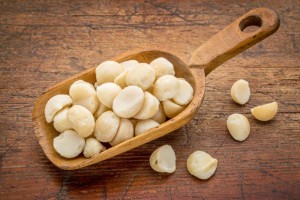

Modern cultivation is mostly for the oil. In plantations, each tree will produce 30-80 kg of nuts, and the nuts yield 15 to 20% of their weight in oil. They grow very well in tropical climates with ample rainfall, but also adapt to dry climates. Candlenut's need little if any care after they are established.
Kukui Nut Oil is a clear, pale, yellow, non-greasy oil, ranking very high amongst polyunsaturated vegetable oils, and can be used for skin and hair care. It is high in linoleic and linolenic acids. Kukui nut Oil also contains Vitamin A, E and F, and therefore, it is a good oil for anti-aging, revitalising and especially restoring sun damaged skin. The oil has been known to be often used in products that treat psoriasis and eczema, as well as acne.


Babassu Oil
Babassu oil (Orbignya oleifera) is extracted from the kernels of the Babassu palm, native to Brazil and found throughout the Amazon region. Solid at room temperature, babassu oil is similar in appearance and application to coconut oil. It has a light consistency, easily penetrates the skin, and is moisturizing and firming in nature. Babassu is related to coconut, so those who are allergic to coconut may still be allergic to this substitute.
This emollient oil can be used on its own or included in a variety of cosmetic preparations such as balms, balms, lotions, creams, body butters, scrubs and soaps.


Sea Buckthorn Oil
Sea buckthorn oil has been used for thousands of years as a natural remedy for various ailments.
It is extracted from the berries, leaves, and seeds of the sea buckthorn plant (Hippophae rhamnoides), which is a small shrub that grows at high elevations in the northwestern Himalayan region (Trusted Source).
Sometimes called the sacred fruit of the Himalayas, sea buckthorn can be applied to the skin or ingested.
A popular remedy in Ayurvedic and traditional Chinese medicines, it can offer health benefits ranging from supporting your heart to protection against diabetes, stomach ulcers, and skin damage.


Plum Kernel Oil
L'huile de prune est un ingrédient soluble dans l'huile qui peut être utilisé dans tout produit anhydre ou dans la phase huileuse d'un produit émulsionné. Il a un merveilleux arôme naturel avec des notes d'amandes et de fruits, qui peuvent apparaître dans le produit final en fonction du niveau de concentration. C'est un produit biodégradable et sans OGM.

Milk Thistle Oil
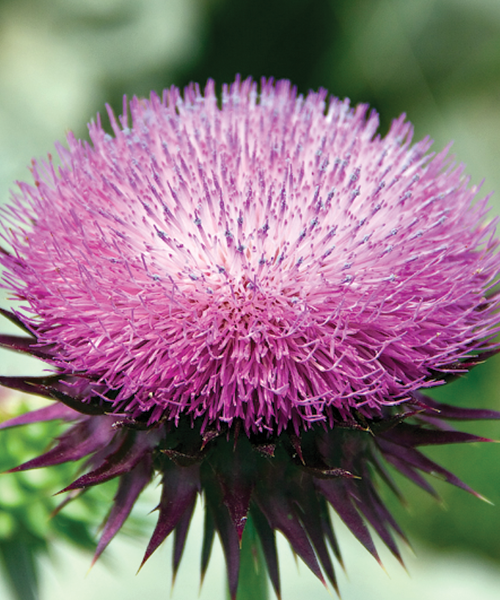
The silymarin is substance in the seeds. It protects the liver against the action usually very harmful for certain products. Clinical trials have demonstrated that one could prevent severe liver poisoning due to the ingestion of carbon tetrachloride or poisonous mushrooms, taking the sylimarme just before or within 48 hours. In Germany, silymarin is used successfully to treat hepatitis and liver cirrhosis.

Silybine chemical structure


Tamanu Oil
The tamanu tree is indigenous to tropical Southeast Asia; it is found in Thailand, Vietnam, Myanmar, Malaysia, South India, Sri Lanka, and the Melanesian and Polynesian islands. It grows up to three meters tall, sporting cracked, black bark and elliptical, shiny leaves. The tamanu tree blooms twice annually with fragrant, white flowers, which later yield clusters of yellow-skinned spherical fruit. The fruit's pulp tastes similar to an apple, within which a large nut is embedded. The nut contains an odorless pale kernel. This kernel is dried in the sun until it becomes sticky with a dark, thick, rich oil; it must be protected from humidity and rain during drying.
This sticky oil is cold-pressed to make a greenish oil. Polynesian Natives believed the tamanu tree was a sacred gift of nature. It was an answer to skin protection from hot sun, high humidity and ocean wind.
It is reputed to have wondrous wound-healing properties, as well as being a cure-all for almost every skin ailment you can think of, from acne to eczema to psoriasis, but all of the miraculous claims are hinged on anecdotal, not scientific, evidence. There’s no harm in using this oil in skin care.
Based on those traditional uses, tamanu oil has been thoroughly researched, and the conclusive evidence on its ability to heal damaged skin is overwhelming. Its benefits are notable for scarring, stretch marks, minor cuts and abrasions, rashes, sores, and much more. It can be used directly on the skin or mixed within formulations. Stores well under any condition but extreme heat will lessen the shelf life.
Tamanu oil has a rich, deep scent with a bold dark colour and because of this it may alter the colour and aroma of cosmetic creations. Tamanu oil may naturally separate or solidify at cold temperatures.