 Essential Oil
 Carrier or vegtetable oil
 Plant straight powder
 Ratio extracts
 Standardized plant extracts


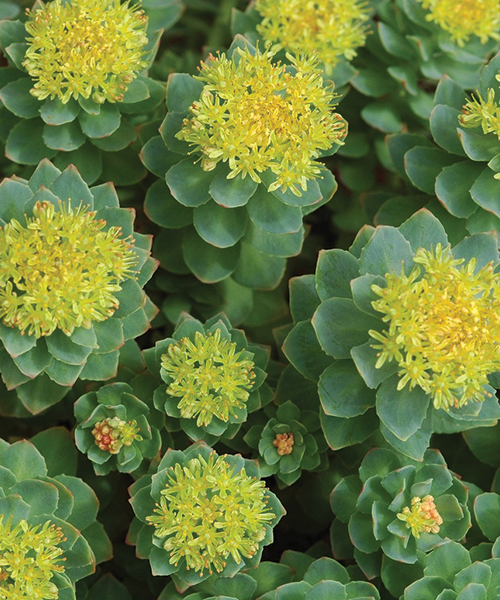


| IDENTIFICATION DATA | |
| Commercial name | Golden root |
| Botanical name | Rhodiola rosea |
| Botanical family | Crassulaceaae |
| Plant part | Root |
| Origin | China |
| Manufacturing place | China |
| Active ingredient(s) | Salidrose (rhodioloside), Rosavin |
Rhodiola rosea Extracts
It was included in the first Swedish Pharmacopoeia (1755). Vikings used the herb to enhance their physical strength and endurance.
Traditional folk medicine used R. rosea to increase physical endurance, work productivity, longevity, resistance to high altitude sickness, and to treat fatigue, depression, anemia, impotence, gastrointestinal ailments, infections, and nervous system disorders.

Cinnamyl alcohol glycoside responsible for the antidepressant and anxiolytic actions of this plant, along with salidroside

The anatomy of golden root
IDENTIFICATION DATA
PROPERTIES
• Powerful adaptogen
• Antifatigue, anti-stress, antihypoxic (protection against damaging effects of oxygen deprivation), anticancer, antioxidant
• Immune enhancing
• Sexual stimulating effects
APPLICATION
Medicinal
Related products


Velvet bean extract
Velvet bean is a tropical legume that is traditionally used in Asia for controlling blood pressure (Chaudhary et al.,2015). In ancient Indian medicine, the plant has been used for a plethora of diseases and ailments, including the following: It has been used for the management of male infertility, nervous disorders, and as an aphrodisiac. The seeds have medicinal properties and have been used in the major traditional medical systems of India for many centuries. The seeds are rich in the compound known as L-DOPA, which is found principally in the seeds, but also in the pods, leaves, and roots. The plant’s leaf extracts and seeds show promise for the treatment of Parkinson’s disease, male infertility, and nervous disorders, mainly due to their antioxidant (free radical scavenging) effects. Parts of the plant may also serve as aphrodisiacs. Velvet bean is a tropical legume that is traditionally used in Asia for controlling blood pressure (Chaudhary et al.,2015). In ancient Indian medicine, the plant has been used for a plethora of diseases and ailments, including the following: It has been used for the management of male infertility, nervous disorders, and as an aphrodisiac. The seeds have medicinal properties and have been used in the major traditional medical systems of India (Ayurveda, Siddha, and Unani-Tibb) for many centuries. The seeds are rich in the compound known as L-DOPA, which is found principally in the seeds, but also in the pods, leaves, and roots. The plant’s leaf extracts and seeds show promise for the treatment of Parkinson’s disease, male infertility, and nervous disorders, mainly due to their antioxidant (free radical scavenging) effects. Parts of the plant may also serve as aphrodisiacs.


Bitter melon extracts
Le melon amer est riche en nutriments, il contient des protéines, du sucre, du phosphore, du calcium, du fer, du potassium, du carotène, de la thiamine, des vitamines, des fibres alimentaires, des acides aminés, etc.
Ces dernières années, il a été découvert que le melon amer peut non seulement aider à réduire l'activité de la glycémie, mais aussi favoriser l'immunité. Dans l'industrie alimentaire, il est principalement utilisé pour les boissons fonctionnelles et l'agent anti-rassissement naturel.


Nopal extract
The nopal or barbarian fig (Opuntia ficus indica), is a widely distributed cactus but mostly founds in Mexico and Mediterranean area. It produces edible fruits with many seed from which we extract oil (see our prickly pear seed oil here) from which we can also produce jams. In numerous dietary supplements, the Nopal pulp is used claiming a positive effect on the blood sugar regulation.
Lastly, the extracts obtained from the cladode (which include the pulp) are used as a fat-absorbed in order to manage the weight.


Astragalus extracts
Astragalus from China * has been the most studied for its medicinal effects. This plant is used in a traditional way, but also in a modern medical setting.
Data from Chinese clinical trials indicate that, despite the methodological weaknesses noted, oral astragalus extracts may reduce nausea, vomiting, and leukopenia (immune failure) associated with cancer chemotherapy, while increasing cancer chemotherapy. effectiveness of the latter.


Epimedium extract
Horny Goat Weed is a herb (Epimedium) that is known for being an aphrodisiac and touted as a Testosterone Booster. It derives its layman names from goats and sheep that acted a bit more frisky after consuming Epimedium that grew near their fields.
It is mainly in the Chinese tradition that we consider Epimedium as a medicinal plant. Chinese herbalists called epimedium Yin Yang Huo, which means "Main or first balance of Yin (female energy) and Yang (masculine energy)." Although most often Chinese herbalists use different species of Epimedium such as E. brevicornum, sagittatum E., E. acuminatum, koreanum E., E. pubescens, E. wushanense, etc. However, the genuine or original one was Epimedium grandiflora.
According to the principles of Chinese medicine, epimedium tones the kidneys and fortifies the yang.
As with many supplements, the claims about the effectiveness of horny goat weed are expansive. And, as is also true with many supplements, researches on the effects of horny goat weed on humans are definitely limited.
A study published in the Journal of Sexual Medicine investigated its effects on rats. Researchers found that rats treated with purified extract of horny goat weed showed improved erectile function. Another study found that icariin is effective in inhibiting human PDE5, the substance that blocks erections, in test tubes. But it also determined that sildenafil (Viagra) is 80 times more potent than icariin.


Terminalia extracts
It is an Ayurvedic herb generally used in powder form. It is very suitable as a hair mask to strengthen the hair, tone it, revitalize it, cleanse it and hydrate it. Harad (also called haritaki) is astringent and antibacterial, which means it has cleansing and anti-blemish properties. Traditionally, in India, this Ayurvedic powder is used to wash the hair, bring suppleness and shine, get rid of dandruff or as a mask to replace conventional conditioners. It was sometimes used in the formulation of oils (dried plant macerated in vegetable oil) that people used to guard against small scalp infections, such as dandruff, but also to promote healthy hair growth. and strong. Today, it is part of the composition of certain quality vegetable colorings, combining henna and plants with the objective of care (purify the scalp, bring shine and softness, have a detangling effect, smooth, sculpt curls and curly locks, make the dye last longer, cover white hair ...).


Boswellia serrata Extract
En ayurvéda, cette pante est appréciée pour soigner les maux des corps fatigués et inflammés. Boswellia is used as a safe support for healthy joint and muscle functions. Regular use can help reduce inflammation-related pain (Gum Resin) such as joint, muscle, nerve pain, etc. It helps soothe the joints and helps promote neuromuscular well-being, and helps reduce symptoms related to stress. Healthy joint and muscle functions Help reduce pain Supports neuromuscular functions